







Keep your projects on schedule with reliable, ready-to-work crews
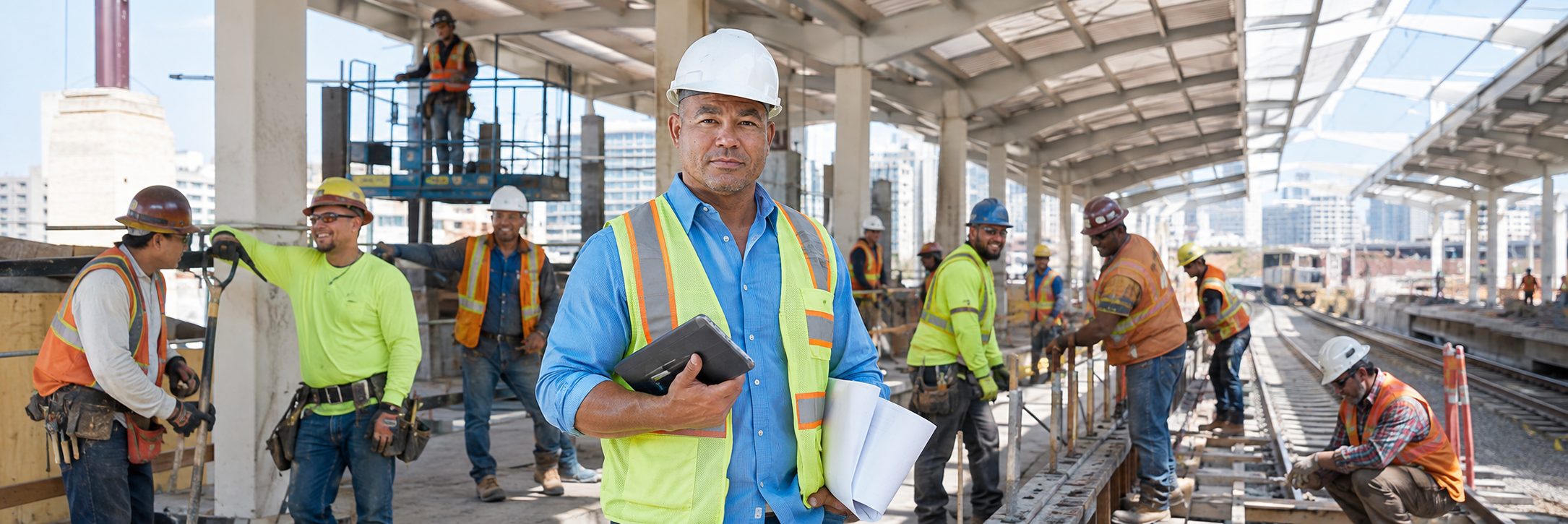
Schedules do not slip because of one dramatic failure; they slip because four people did not show up on a Tuesday. Labor Dia exists to close that gap with crews who are verified, reachable, and ready to work the shift you actually posted — not the one they hoped you meant. Every request routes to workers matched on trade, location, and availability, so the foreman's morning starts with a headcount instead of a phone tree.
The staffing math is not in any contractor's favor right now. The U.S. Bureau of Labor Statistics reported a May 2024 median annual wage of $46,050 for construction laborers and helpers and projects 7 percent employment growth from 2024 to 2034 — much faster than the average for all occupations — with roughly 149,400 openings each year. When that many roles turn over annually, a general contractor competing on wage alone is competing with every other GC in the metro. Reliability of placement, not price, is what protects a critical-path date.
Compliance is the other half of the promise, and we treat it as a feature rather than paperwork. Federal wage-and-hour rules governing minimum wage, overtime, and recordkeeping are administered by the U.S. Department of Labor's Wage and Hour Division, and state requirements frequently sit on top of them. Crews sourced through a process that documents hours and classifications correctly are crews that do not become an audit six months after the job closes.
If you are staffing a pour, a demo, a punch list, or a shutdown window, post the request and see how quickly it fills. We would rather earn the second call by getting the first one right than sell you a subscription to a problem you already have. Tell us the trade, the site, and the start time — the crew can be confirmed today.
Sources: U.S. Bureau of Labor Statistics — Construction Laborers and Helpers; U.S. Department of Labor — Wage and Hour Division